
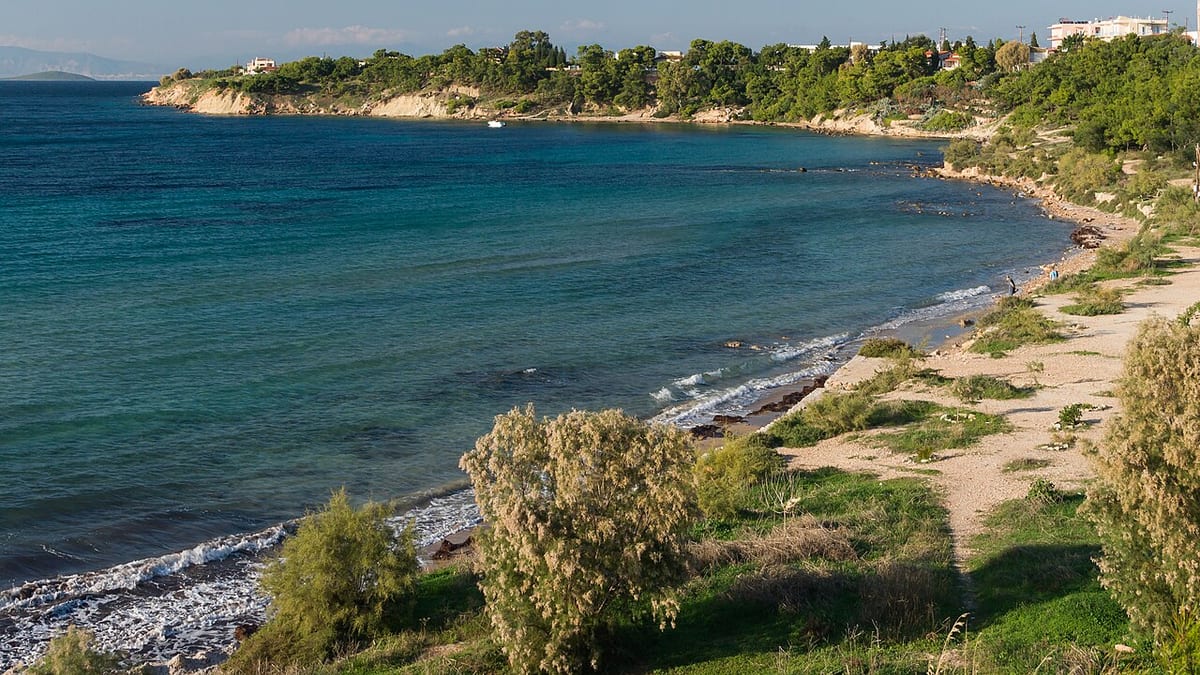
To get from Athens to Aegina, travel to Piraeus and take a ferry to the island port that matches your plans. Aegina Town is the straightforward choice for a first visit centred on the waterfront and town. Conventional ferries can carry vehicles; faster passenger services and other island ports require a more deliberate comparison than simply choosing the shortest crossing. [1] [2]
Book the port, not just the island
Aegina is served through different ports, including the main port in Aegina Town, Souvala and Agia Marina. They are not interchangeable arrival points. A cheaper or faster sailing to one of the other ports can lose its advantage when your hotel or intended sightseeing lies elsewhere on the island. [2]
For a town-focused day trip, choose a ticket explicitly showing the main Aegina port. That keeps the first part of the visit simple: you arrive where you intend to spend time rather than beginning with an additional transfer. For an overnight stay, use the accommodation address to choose the port, then check the final leg before booking.
Read both directions of a return reservation. An outbound sailing to one port and a return from another may be intentional, but it requires transport across the island. It should not be an accidental consequence of selecting the cheapest search results independently.
Piraeus is the mainland departure point for the routes discussed here. The port gate and vessel shown on the ticket are more useful than a generic map pin labelled "Piraeus." Confirm those details when booking and again before boarding, especially when comparing different operators.
Conventional ferry or faster passenger service?
Saronic Ferries publishes a crossing of approximately one hour and ten minutes for its Aegina service. Its conventional operation offers a practical option for travellers taking a car, as well as foot passengers. Faster passenger services can reduce the sea journey, but the available route, vessel and island port must be compared together. [1] [2]
A faster crossing is most valuable when it creates useful time on the island. If the quicker boat leaves much later, arrives at a less convenient port or requires a more expensive onward transfer, the overall day may not improve. Compare departure-to-destination time rather than the sailing duration in isolation.
For a leisurely first visit, the conventional crossing can fit well when its timetable gives you a full day and an uncomplicated return. For a shorter visit, a passenger-only fast service may make sense. Neither choice should depend on a promise of calm seas or perfect punctuality.
Choose a departure that leaves a margin before any fixed island activity. Likewise, avoid returning to Piraeus so close to a separately booked flight that a delayed sailing would make the connection unworkable. A ferry ticket and an airline ticket are separate commitments unless a specific protected arrangement says otherwise.
What the published ferry fare covers
Saronic Ferries lists the Piraeus–Aegina main-port adult fare at €12 each way. A car up to 4.5 metres is listed at €29 each way, while a larger car falls into a different band. Its Souvala route has a separate tariff, another reason not to compare island tickets without checking the arrival port. [3]
At those listed rates, two adults travelling as foot passengers would pay €48 for return crossings. Taking a qualifying small car adds €58 for the vehicle, producing a calculated total of €106 before fuel, rental, parking or other expenses. This example assumes ordinary adult fares and the stated vehicle category; it is not a package quotation.
That comparison helps frame the car decision. The vehicle surcharge may be justified for a group visiting several separated places, but it is difficult to justify solely to walk around Aegina Town. Compare it with the actual local transport you would otherwise need, not an invented island-wide taxi estimate.
When travelling with a hire car, obtain the rental company's permission for ferry transport and establish the insurance conditions. A ferry operator's willingness to carry the vehicle does not establish that your rental contract permits the journey.
Leave enough time for Piraeus
Work backwards from the operator's boarding instructions, then add the journey from your accommodation to the correct gate. Reaching a Piraeus transport station is not necessarily the same as reaching the vessel. Keep luggage, tickets and any vehicle documents organised before entering the boarding area.
Saronic's FAQ distinguishes an online reservation from the ticketing steps that may apply and identifies its port ticket offices. Follow the instructions for your booking, particularly if collection or a change is required. Do not assume that an email confirmation alone is the boarding document for every operator. [4]
For a car, allow for the vehicle queue and follow crew directions about who remains with the vehicle and where passengers board. For a foot passenger, keep essential belongings with you rather than placing them somewhere difficult to retrieve before disembarkation.
A sensible arrival buffer is a planning choice, not a claim that the operator guarantees boarding until the last minute. Travelling early enough to resolve a wrong gate or missing ticket is far less stressful than trying to recover the same time at the ramp.
Build a day that matches your transport
For a first visit without a car, make Aegina Town the core of the day and add only one excursion whose outward and return arrangements are clear. The operator's destination guide identifies the island's town, beaches and archaeological interest, but a list of attractions is not a timetable connecting them. [5]
For example, a town walk, a meal and an arranged visit elsewhere can make a complete outing. Trying to combine several beaches and a distant monument on an unverified local-bus schedule risks turning the visit into a sequence of waits. An overnight stay gives you more flexibility if exploring beyond the port is the main purpose.
Buy or reserve the return that fits the day you actually want. Do not automatically choose the last possible sailing as a substitute for planning. An earlier return can be the better choice when you have children, luggage or an onward journey in Athens.
Before leaving the town for the final activity, check the time needed to get back to the correct port. Keep the ferry details saved offline and respond to any operator notice about a change. The strongest Athens–Aegina plan is not the one with the shortest advertised crossing: it is the one in which the mainland transfer, island port, sightseeing and return all fit together.