For bougatsa in central Athens, begin with I Thessaloniki stou Psyrri for a specialist stop, or Krinos when you want to combine the pastry with a historic sweet shop. Choose by location and the filling available when you arrive, rather than treating an online ranking as proof that one counter always serves the best batch. [1][2]
Two central stops with different reasons to visit
I Thessaloniki stou Psyrri, at 1 Iroon Square, is the more direct choice when bougatsa is the purpose of the outing. The specialist is listed in current local business information and travel coverage under variations including Bougatsadiko I Thessaloniki. Save the address as well as the name: translated spellings are not consistent across maps and guidebooks. [1][3]
The location makes it a convenient breakfast anchor for a visit to Psyrri. Order the pastry first, see how substantial the portion is, and decide whether you need anything else. There is little benefit in booking a large hotel breakfast and then arriving too full to enjoy the food you specifically came to try.
Krinos, at 87 Aiolou, is a different proposition. Athens' official tourism guide identifies the long-established shop chiefly with loukoumades, the small fried dough sweets, but also notes its custard bougatsa. It is worth considering for travelers who want a sweet-shop visit rather than a dedicated bougatsa crawl. [2][4]
At Krinos, do not confuse the two desserts when ordering. Bougatsa is the pastry; loukoumades are a separate item. For two people interested in both, sharing modest portions makes more sense than each ordering a full serving of everything. Ask what is available before building the meal around a photograph from an older review.
These recommendations are based on identifiable venues, documented offerings and practical location, not a claimed firsthand tasting or a laboratory comparison of pastry. That is a more useful basis for a short city visit than pretending a citywide winner can be established from review scores alone.
Decide whether you want custard or a savoury breakfast
Bougatsa is often presented to visitors as a single sweet item, but specialist coverage of I Thessaloniki describes sweet and savoury versions. Say the filling you want instead of relying on the word alone. For the familiar sweet version, ask for custard; for a savoury breakfast, ask what cheese or other fillings are being served that day. [3]
The practical distinction is appetite. Custard pastry works as a shared sweet breakfast or a coffee accompaniment. A savoury portion may suit someone who does not want sugar first thing in the morning. Neither choice requires ordering a second dish merely because the food looks small behind the counter.
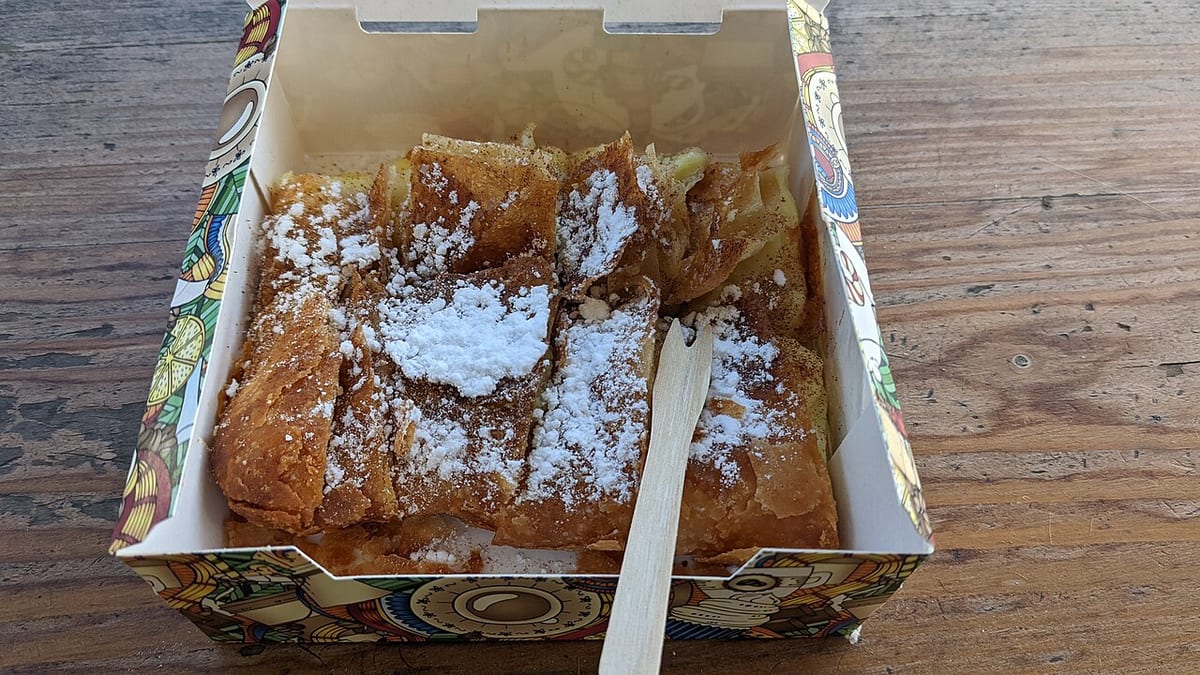
Ask whether icing sugar and cinnamon are added before serving. A topping preference is easy to explain before the pastry is finished and harder to change afterward. Where the pastry is cut into small pieces, take a fork rather than assuming it will behave like a sealed hand-held pie.
For a group, order the same filling first when you want to compare two shops. Comparing a custard portion at one place with a cheese portion elsewhere tells you more about your filling preferences than about the bakeries. Keep drinks separate from the comparison too: a very sweet coffee can change how sweet the pastry seems.
Freshness matters more than a famous name
A practical question at the counter is when the next tray will be ready. You do not need a detailed baking interview; simply establish whether the portion on offer is warm, freshly cut or being reheated. Then choose according to how you like your pastry.
Warm pastry is my recommended starting point for a first tasting, because it makes the contrast between filling and layers easier to appreciate. That is an editorial preference, not a guarantee about either bakery's production schedule. A famous address cannot ensure that every customer arrives at the same point in a baking cycle.
Morning is a sensible planning choice for a breakfast-focused visit, but do not turn that into an invented claim that the ovens operate at a particular hour. Published listings for small shops can disagree. The specialist listing reviewed for this guide contained inconsistent opening-hour wording, so exact daily hours are not reproduced here. [3]
Make the bakery your first flexible stop rather than a reservation-dependent appointment. Have a nearby café alternative in mind and avoid crossing the entire city for one unconfirmed tray. This is particularly helpful on a departure morning, when an unexpectedly closed counter should not derail the journey to the airport.
Understand the portion before comparing prices
Ask whether the displayed price is for a standard serving, a piece or a weight. A bakery counter and a table-service café may package and price the same category of food differently. Without knowing the serving size, a seemingly cheaper number is not a meaningful comparison.
This guide does not publish a purported current price for either recommended stop because a dependable, current, directly comparable price list was not established. An old menu screenshot is a poor substitute: even an accurately copied price can mislead when its date or portion basis is missing.
For a simple order, ask for one portion and one drink, then confirm the total. To share, ask for the pastry to be divided and request the utensils you need. For takeaway, choose packaging that keeps the topping contained and carry the box level. Do not bury it underneath water bottles in a daypack.
Buying an extra serving to eat several hours later is a different decision from eating at the counter. Ask the shop how the filling should be stored, especially in warm weather. A hotel room without suitable storage is not a good place to improvise food handling instructions.
Fit the stop into your walk
Choose the Psyrri specialist when your morning is already focused on that district. Choose Krinos when an Aiolou-area walk and traditional sweets are a better fit. The point is to make breakfast support the day's route, not to create a lengthy detour for a marginal distinction you cannot verify in advance.
A two-stop tasting is most enjoyable as a shared outing with time between portions. Eat a small serving, take a walk, then decide whether you still want the second. Do not pre-order several full portions simply to produce a personal ranking; food fatigue makes the comparison less useful.
Travelers with dietary restrictions should name the actual ingredient they avoid. Pastry, custard, cheese and toppings can introduce different concerns, and a savoury filling is not automatically dairy-free. Ask about both the recipe and preparation environment when an allergy is involved; a visual inspection of the pastry cannot settle that question.
For most visitors, one well-chosen stop is enough. Order the filling clearly, establish the portion size and eat it while it is in the condition you prefer. That approach is more likely to produce a satisfying Athens breakfast than chasing a long list of supposedly essential bakeries.