The Temple of Poseidon is worth visiting for the combination of a classical monument and an exposed coastal setting, not for a large complex that fills an entire day. Choose it when the journey along the Athens coast appeals to you as well. Sunset can be memorable, but a clear daytime visit is often easier to organise and less dependent on a single moment. [1]
The setting is a substantial part of the experience
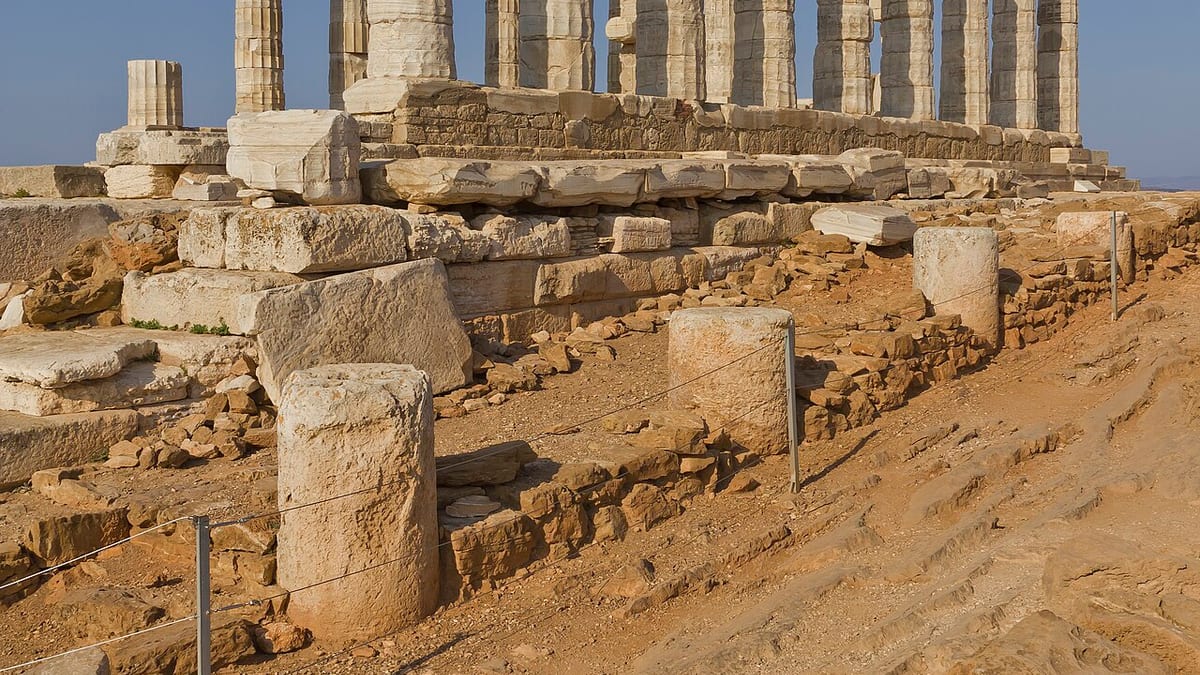
Sounion is different from adding another ruin to a city walking route. The temple stands at the southern end of the Attica peninsula, where the sea and headland give the surviving columns much of their impact. The responsible heritage organisation identifies the sanctuary with Poseidon, the god of the sea. [1]
The useful question is whether that combination matters to you. Someone interested in landscape photography, Greek antiquity or a coastal excursion may find it a strong addition to Athens. Someone who wants dense displays of objects and detailed interpretation may get more value from another museum in the city.
Avoid judging the trip solely by how many columns remain. A visit can be rewarding without a long list of separate sights. Equally, the presence of an iconic monument does not mean everyone should spend a substantial part of a short Athens stay reaching it.
I would prioritise the Acropolis and a central neighbourhood walk on a first, very brief visit. Add Sounion when you have another half-day or when the coastline is one of your main interests. That recommendation is about allocating limited time, not ranking one ancient sanctuary above another.
What the ticket buys - and what it does not
The published full-price archaeological-site ticket is €20; the reduced ticket is €10 for eligible visitors. The concession is conditional, so an adult should not budget for it without confirming that the relevant category applies and bringing the required documentation. [2]
For two adults paying full admission, the site costs €40 before transport, food or a guided service. For four, it is €80. These are straightforward calculations from the official tariff, not package prices. When comparing a tour with independent travel, establish whether this admission is included or paid separately.
The ticket does not turn the surrounding area into an all-inclusive outing. A meal, a beach stop, guiding and transport are separate purchases unless a package explicitly includes them. A tour described as a "sunset experience" should still explain its actual entry arrangements.
The heritage operator lists several free-entry dates, including the first and third Sundays from November through March. A qualifying free day can reduce the cost, but it does not guarantee clear weather, unlimited capacity or a quiet visit. Choose it because it suits your itinerary, not because a free ticket makes an otherwise awkward journey automatically worthwhile. [2]
Sunset is a choice, not a requirement
The site opens at 09:30 and closes at sunset, with last admission twenty minutes before closing. That is the crucial practical detail: sunset is also the end of the operating day, not the beginning of an evening when you can linger indefinitely among the columns. [2]
My recommendation is to arrive well before the final entry window, allowing time to look at the monument while there is still useful daylight. Treat forty-five minutes to an hour before sunset as a planning buffer rather than a guarantee about queues or the exact length of your visit.
A sunset departure from central Athens also concentrates several uncertainties into one trip: road conditions, the chosen route, the weather and the entry deadline. A late arrival cannot be repaired by staying later once the site closes.
Daytime offers a different advantage. You can study the setting without watching the clock so closely, combine the visit with another coastal stop and return without making darkness part of the drive. Photographers may prefer particular light, but travellers primarily interested in the sanctuary need not regard sunset as the only legitimate experience.
Cloud, haze and wind can change the result. A booking promising a sunset excursion is a promise about timing, not a guarantee of a clear orange sky. Choose a cancellation policy that you understand, especially when the photograph rather than the monument is the main reason for going.
Compare transport by the whole outing
KTEL Attikis publishes a coastal Sounion route, while the official heritage page also gives car-access information. Neither establishes a door-to-door appointment. Your starting neighbourhood, the departure point, traffic and any coastal stops all affect the practical timetable. [3] [2]
An organised excursion is attractive when you want a single pickup arrangement and a return after the visit. Ask whether the itinerary allows actual site time rather than only a brief photograph stop, whether a guide accompanies you inside, and whether admission is additional.
A rental car offers control over the coastal route and meal stops. It also introduces a parking decision, a driver who must remain comfortable with the return journey, and rental costs that may outweigh the saving for one person. Do not rent a car solely because the map shows a straightforward road.
The public bus can suit a budget-conscious daytime visit, but build the plan around a confirmed return departure. A timetable that gets you to Sounion does not by itself establish that you can stay until sunset and still return conveniently. Check the operating date and direction rather than relying on a summer screenshot. [3]
For a group, compare totals. A vehicle or private transfer may become more competitive when divided among several people, while four individual tour tickets can add up quickly. Keep entrance fees on the same side of every comparison so you are not comparing an inclusive package with a transport-only fare.
Make the visit comfortable rather than ambitious
The headland is an outdoor archaeological setting. Wear footwear suitable for uneven surfaces and bring the layers appropriate to the forecast; an exposed viewpoint can feel different from a sheltered café in central Athens. Carry what you need rather than assuming that every item will be available at the entrance.
The operator lists parking and toilets, but those amenities do not establish that every part of the archaeological route is suitable for every mobility aid. A visitor with a specific access requirement should ask about the path, gradients and the closest practical viewpoint before paying for a non-refundable transfer. [2]
Leave enough space in the day for an ordinary meal and a relaxed return. A coast-and-temple afternoon is usually a better use of this destination than a tightly packed sequence of distant stops that leaves only the final twenty minutes for the sanctuary.
The strongest reason to go is that you want both the place and the journey. The strongest reason to skip it is that reaching it would displace the central Athens experience you care about more. Neither choice is a failure to see the city properly; it is a decision about what deserves your limited travel time.